
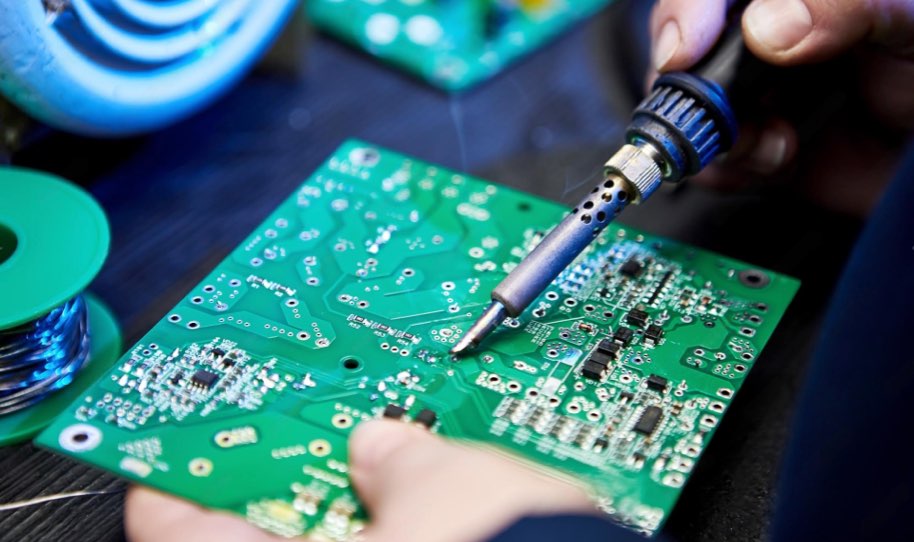
Microcontrollers are the foundation of many modern devices, ranging from household robots to medical equipment and automotive systems. The UPAN microcontroller, based on the STM32, is a versatile solution for projects of various scales and complexities. In this article, we want to explain why the UPAN microcontroller was developed with STM32 over Arduino and highlight the Arduino advantages preserved in the UPAN microcontroller.
Arduino is an open-source platform that allows for the creation of various electronic devices without deep knowledge of programming and electronics. STM32, on the other hand, is a microcontroller built on the ARM Cortex-M processor and is intended for professional developers.
Characteristics of Arduino and STM32
Arduino and STM32 are two of the most common platforms for creating electronic devices using microcontrollers. However, there are several key differences between them.
Microprocessor and architecture: The main differences between these platforms begin with the microprocessors used and their architectures. Arduino often uses AVR processors with RISC (Reduced Instruction Set Computing) architecture, while STM32 uses ARM processors with ARM Cortex-M architecture. ARM Cortex-M is a processor with higher performance and efficiency than RISC.
Speed and performance: STM32 has significantly higher speed and performance compared to Arduino. This means that a system built on STM32 can process tasks faster and more efficiently, which is especially critical in projects requiring the processing of large volumes of data.
In addition to this, STM32 supports various forms of communication, such as I2C, SPI, and CAN, allowing it to exchange data with other devices in real-time, which also has a positive effect on performance.
Comparison by Performance
| Comparative characteristics | Arduino | STM32 |
| Clock frequency | About 16 MHz | From 72 to 400 MHz |
| RAM | From 2 to 8 KB | From 20 to 256 KB |
| Number of I/O pins | From 14 to 54 | From 16 to 144 |
Programming complexity: Code on STM32 can be more complex to write, but in return, it has greater performance and closer-to-hardware control of components. This can be useful for projects where every clock cycle or byte of memory is critical.
Arduino is most suitable for simple projects, such as LED or motor control, reading sensors, or sensors. Additionally, Arduino can be used in medium and large projects if additional expansion modules and libraries are used. For example, the Arduino Ethernet Shield allows you to connect the board to the Internet, and the TinyGPS library allows you to obtain GPS coordinates.
STM32 is suitable for more complex projects, such as controlling multi-channel ADCs, sensor data processing, machine control, as well as embedded systems such as controlling car engines, industrial controllers, medical equipment, etc.
However, STM32 is more difficult to use than Arduino and requires deeper knowledge of electronics and programming.
Advantages and Disadvantages of Arduino and STM32
Arduino is an open-source platform with relatively simple programming tools and a rich library of ready-made code, making it very accessible to beginners. It includes AVR microcontrollers, which are often used to create simple projects.
Advantages:
Ease of use and setup thanks to ready-made libraries and IDE;
Support from a large community and numerous ready-made projects;
Disadvantages:
Not suitable for complex and high-performance tasks;
Limited resources and capabilities;
Suboptimal use of memory and processor time;
Issues with expanding capabilities and scaling projects.
STM32 represents a more complex platform that supports a wider range of ARM Cortex microcontrollers, making it more powerful and suitable for creating more complex devices.
Advantages:
Performance and ability to work with various interfaces;
Extensive capabilities for expanding and scaling projects;
Optimal use of resources and power consumption.
Disadvantages:
Complexity of initial setup and programming;
High costs for purchasing and developing projects;
Need to write code from scratch.
UPAN Microcontroller
The UPAN microcontroller is a modern device with high performance and ease of use. It is based on the STM32 microcontroller with a touch screen, providing efficient execution of various tasks without programming and complex settings. As a result, UPAN becomes a universal solution for a wide range of projects, from simple devices for home use to complex industrial systems.
One of the key advantages of the UPAN microcontroller is its intuitive interface. The device is equipped with a large touch screen display, which provides convenient access to all control functions. This makes the process of setting up and controlling motors as simple and understandable as possible for users of all skill levels.
Additionally, the UPAN microcontroller supports various forms of communication, including Bluetooth and the ability to connect to a PC via a Type-C connector. This provides flexibility in motor control and allows users to work with the device from any point in the room. Thanks to these features, the UPAN microcontroller becomes the perfect choice for both home enthusiasts and professional developers.
